Translate

Saturday, September 29, 2018

Oreo is now running on almost 20% of Android devices

Your (usually) monthly fix on the current state of Android.

About once a month, Google releases distribution numbers that outline the various Android versions and the percentage of current devices they're running on. This data is meant for developers so they can create and update their apps according to which Android versions are the most popular, but they also give enthusiasts like us a glimpse into how quickly OEMs are adopting the latest and greatest the platform has to offer.
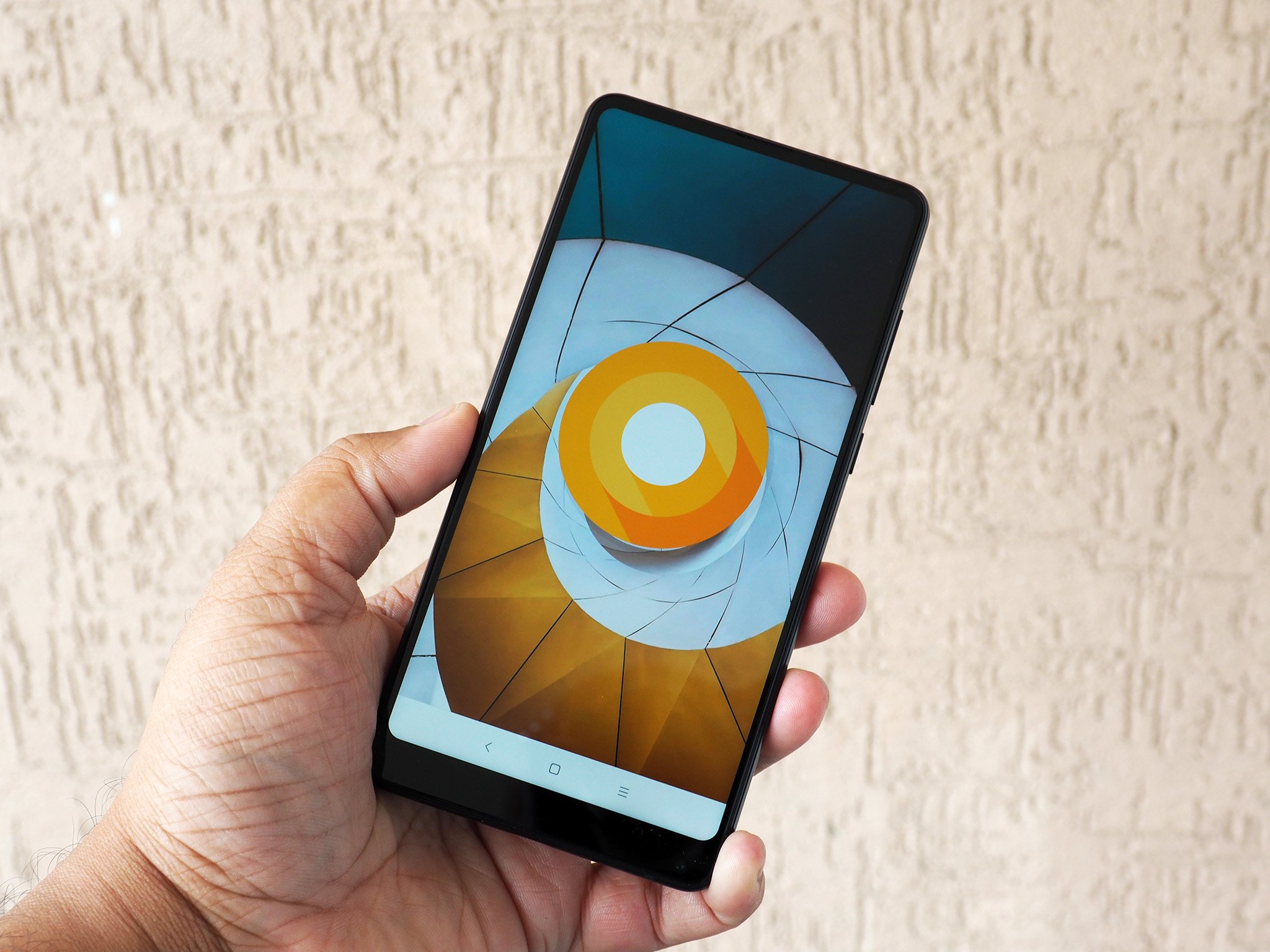
To source this data, Google tracks the Android versions of any devices accessing the Play Store over the course of a 7-day period. This ensures that only active Android gadgets are being accounted for and not your HTC Dream that's been sitting untouched in a drawer for the past few years.

Any version that accounts for 0.1% or more is listed, but versions that have less than that are ignored.

Without further ado, here's the current state of Android.

September 2018

August saw the release of Android Pie, and September saw the new version start pushing out to more and more devices, but alas, Pie is not on a big enough percentage of devices to warrant a slice on the pie chart, pun intended. Last year's Android version, Oreo is now available on 19.2% of Android devices, but over half of the Android devices that visited the Google Play Store this month were still running Nougat or Marshmallow.

While conventional wisdom says the holiday treat that lasts forever is fruitcake, Gingerbread is still hanging on at 0.3%, alongside Ice Cream Sandwich. Here's to hoping that Google can replace one or both of them with Pie in their pie chart by Christmas.

July 2018
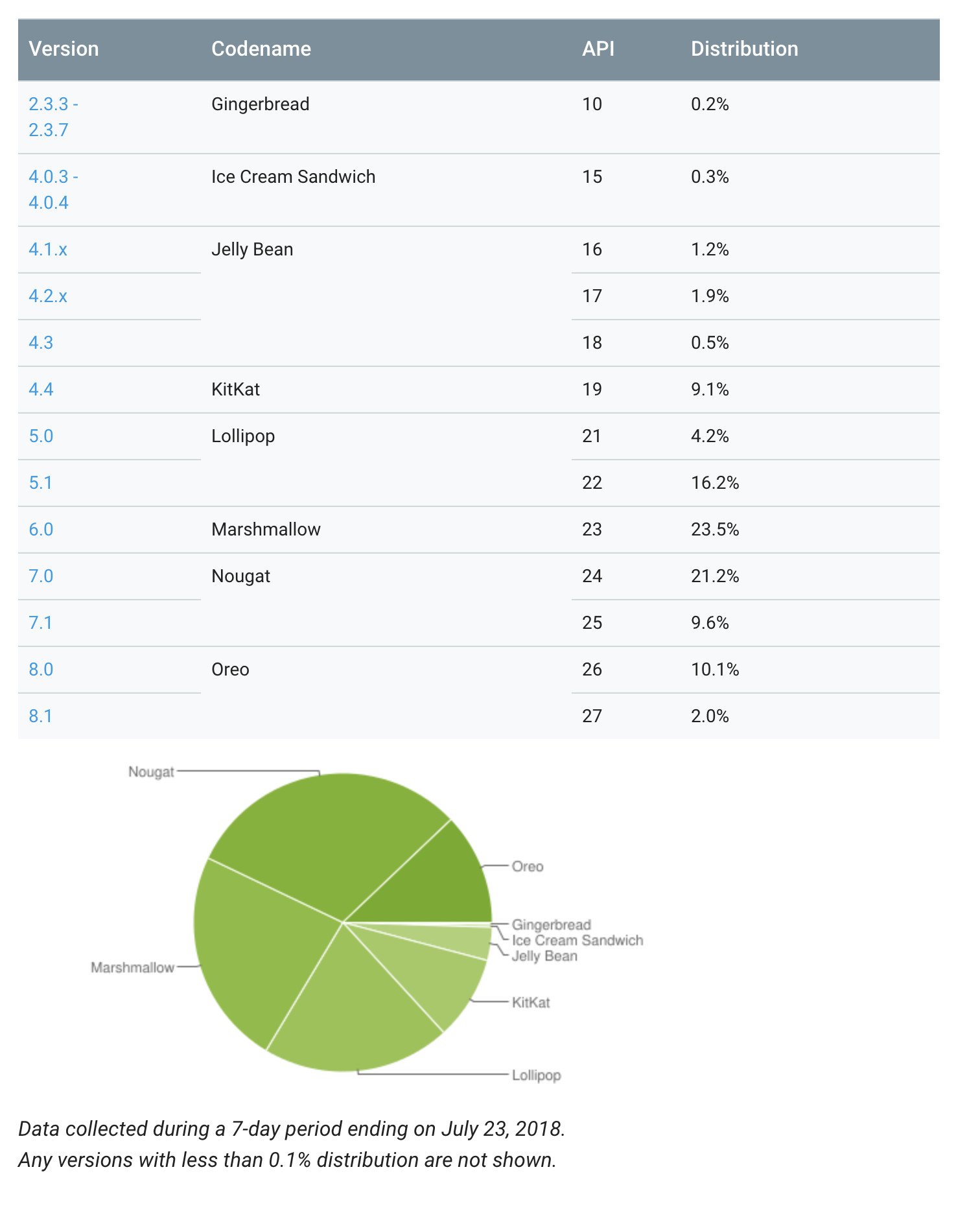
It's been a hot minute since we got our last batch of distribution numbers, but after skipping over June, Google's back with an all-new set of data for July.

The biggest highlight for this month shows Android Oreo (8.0 and 8.1) now available on 12.1% of all devices — a huge step up from the 5.7% it saw just a couple months back. That's still not a great adoption rate, but at least we're getting somewhere.

The rest of the changes compared to May are as follows:

  • Gingerbread — 0.1% decrease
  • Ice Cream Sandwich — 0.1% decrease
  • Jelly Bean — 0.7% decrease
  • KitKat — 1.2% decrease
  • Lollipop — 2% decrease
  • Marshmallow — 2% decrease
  • Nougat —0.3 decrease
  • Oreo — 6.4% increase

May 2018

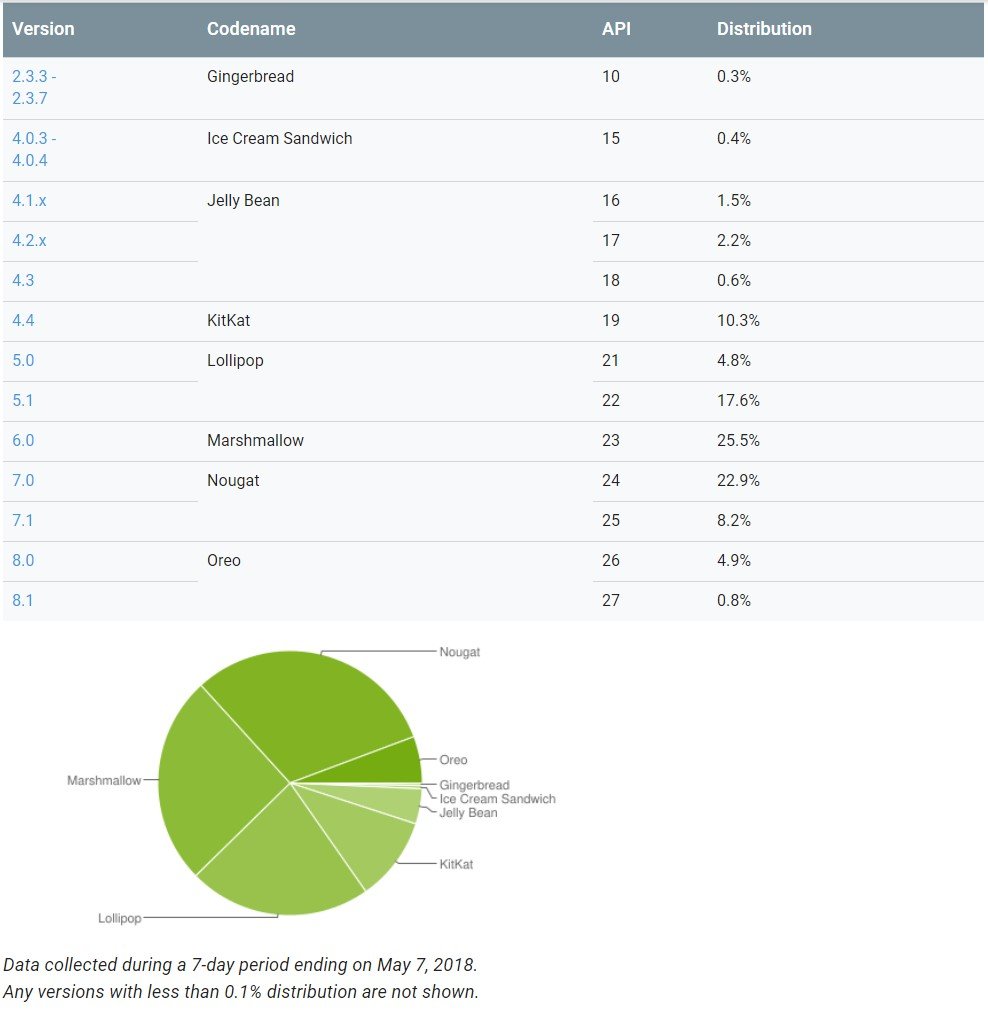
The data for May corresponds to Play Store activity for the seven-day period ending on May 7. Oreo has picked up another percentage point over the course of the month, and is at 5.7% overall — 4.9% being 8.0 and the other 0.8% for 8.1.

Nougat also saw a slight increase from 30.8% to 31.1%, followed by Marshmallow by 25.5%. Here's the breakdown of how things changed:

  • Gingerbread – No change
  • Ice Cream Sandwich – No change
  • Jelly Bean – 0.2% decrease
  • KitKat – 0.2% decrease
  • Lollipop – 0.5% decrease
  • Marshmallow – 0.5% decrease
  • Nougat – 0.3% increase
  • Oreo – 1.1% increase

April 2018

For April of 2018, Google tracked Android devices accessing the Play Store for 7 days with the collection period ending on April 16.

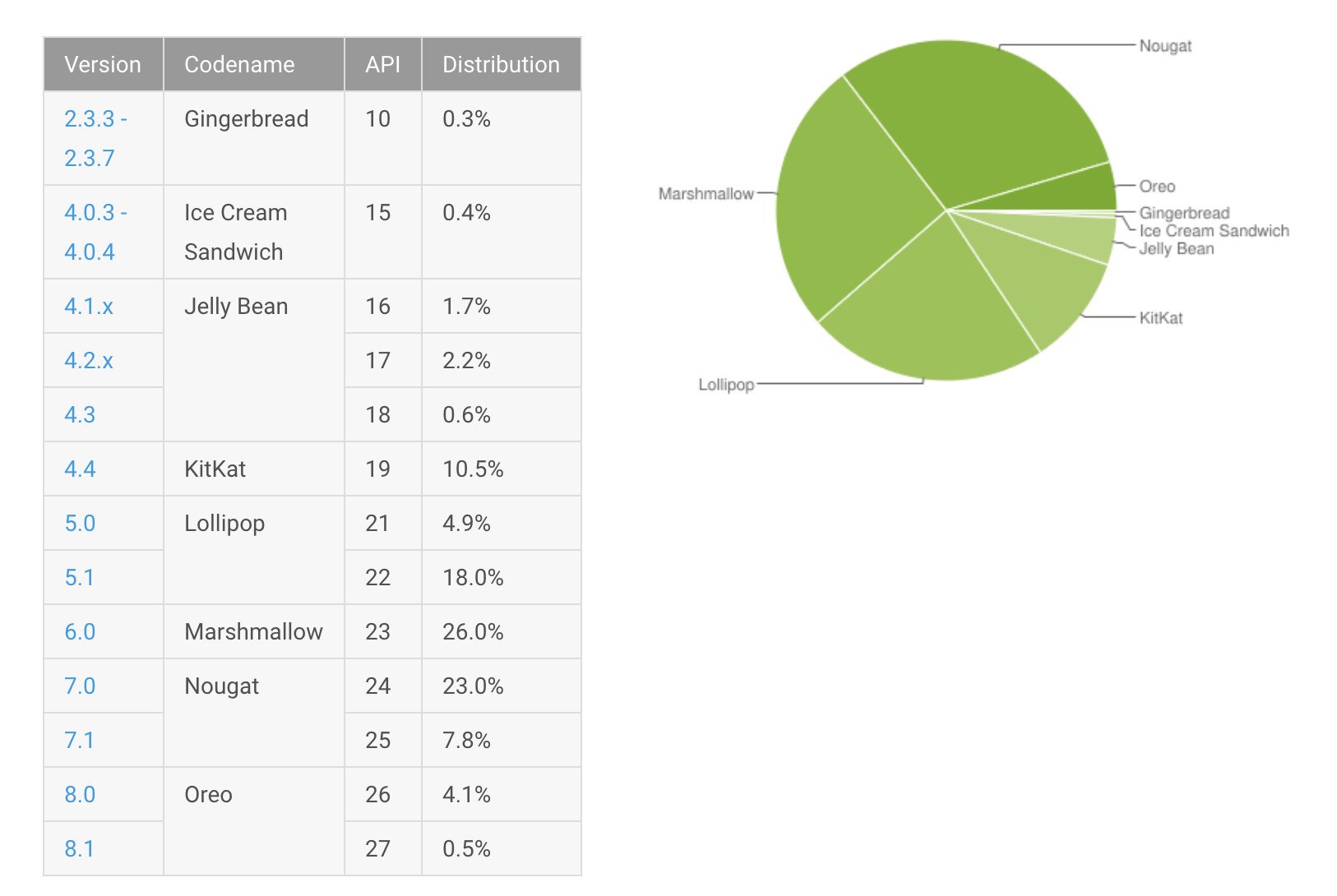
The last report from February showed Oreo just barely accounting for more than 1% of Android devices, but that number has since climbed to 4.6% (4.1% being 8.0 and the other 0.5% going to 8.1). Nougat also sees an increase with a jump to 30.8% compared to 28.5% (7.1 and 7.0 combined), and Marshmallow is still trailing in second place at 26%.

Comparing these numbers to February's findings:

  • Gingerbread – No change
  • Ice Cream Sandwich – No change
  • Jelly Bean – 0.5% decrease
  • KitKat – 1.5% decrease
  • Lollipop – 1.7% decrease
  • Marshmallow – 2.1% decrease
  • Nougat – 2.3% increase
  • Oreo – 3.5% increase

February 2018

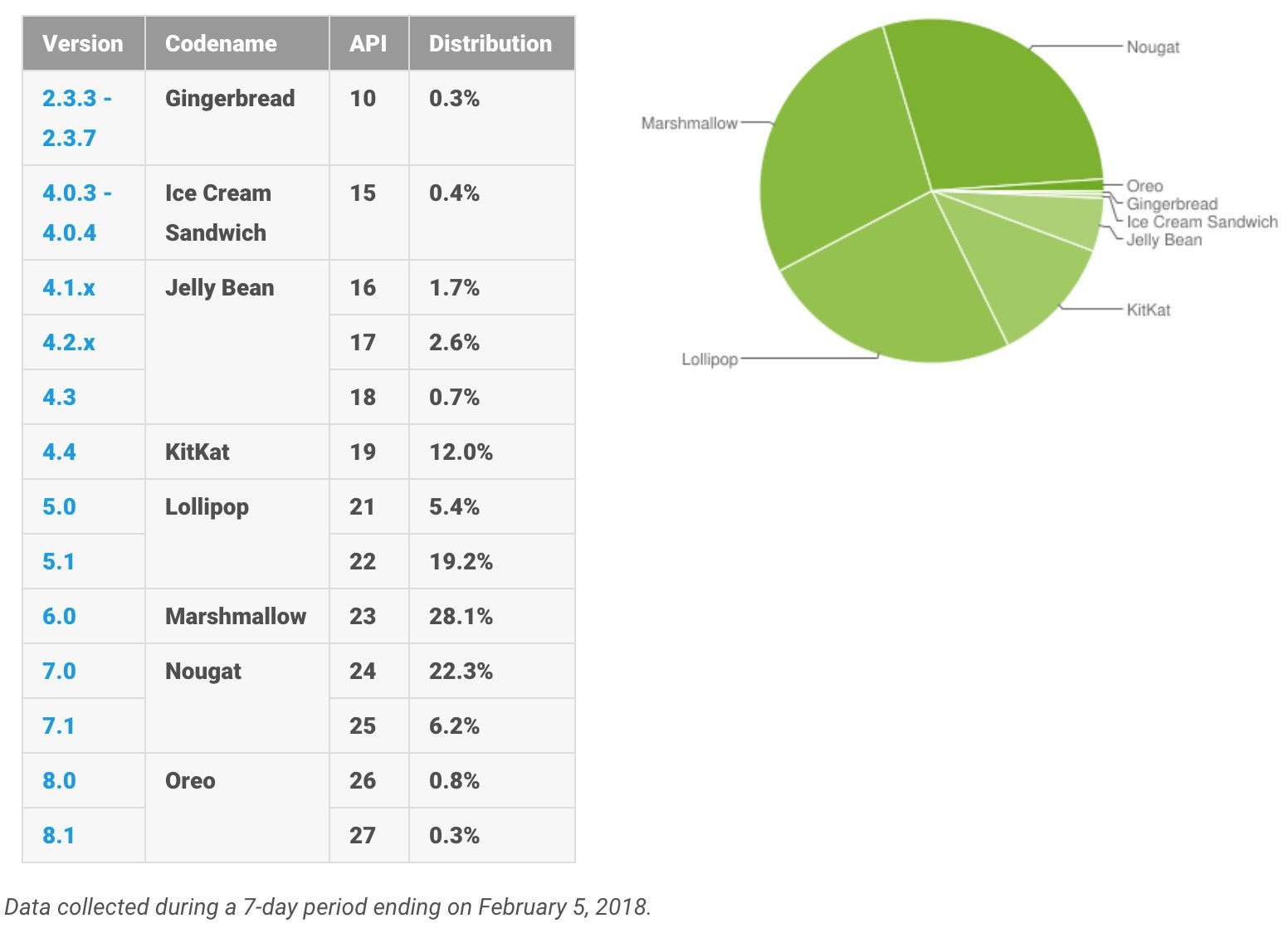
February's report was the first time Android Oreo crossed the 1% threshold despite that version of the OS being released back in August of last year.

Marshmallow continued with a tight grip at 28.1%, but this also marked the first time that Android Nougat jumped into first place with a combined total of 28.5% – that including versions 7.0 and 7.1.

Additionally, Ice Cream Sandwich (4.0.3 to 4.0.4) also finally dropped to 0.4% from last January's 0.5%.

January 2018
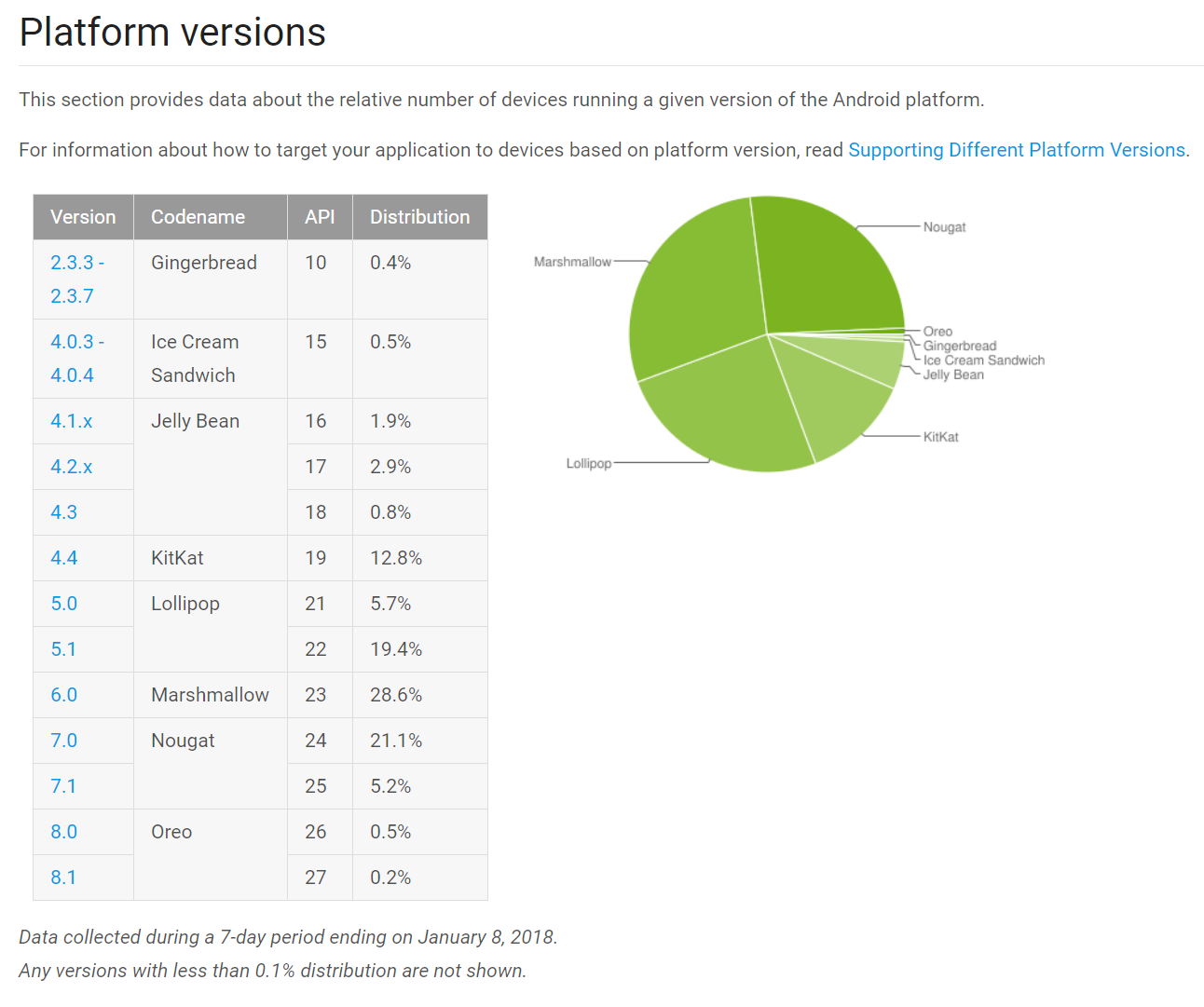
In January 2018, Android Marshmallow still reigned supreme as the most popular version of the OS at 29.7%. This also saw 8.1 Oreo make an appearance on the board for the first time with 0.2% adoption, and 8.0 remained at the same 0.5% it was at in December.

Jellybean and KitKat both decreased compared to last month's check-in, but Ice Cream Sandwich and Gingerbread are still holding on at the same 0.5% and 0.4%, respectively.

What version of Android are you running?

What about the phone you're using? What one is it and what version of Android is it rocking? Sound off in the comments below and let me know!


from Android Central - Android Forums, News, Reviews, Help and Android Wallpapers https://ift.tt/2EUd1Uj
via IFTTT

LIFX bulbs too pricey? Here are some cheap but smart alternatives

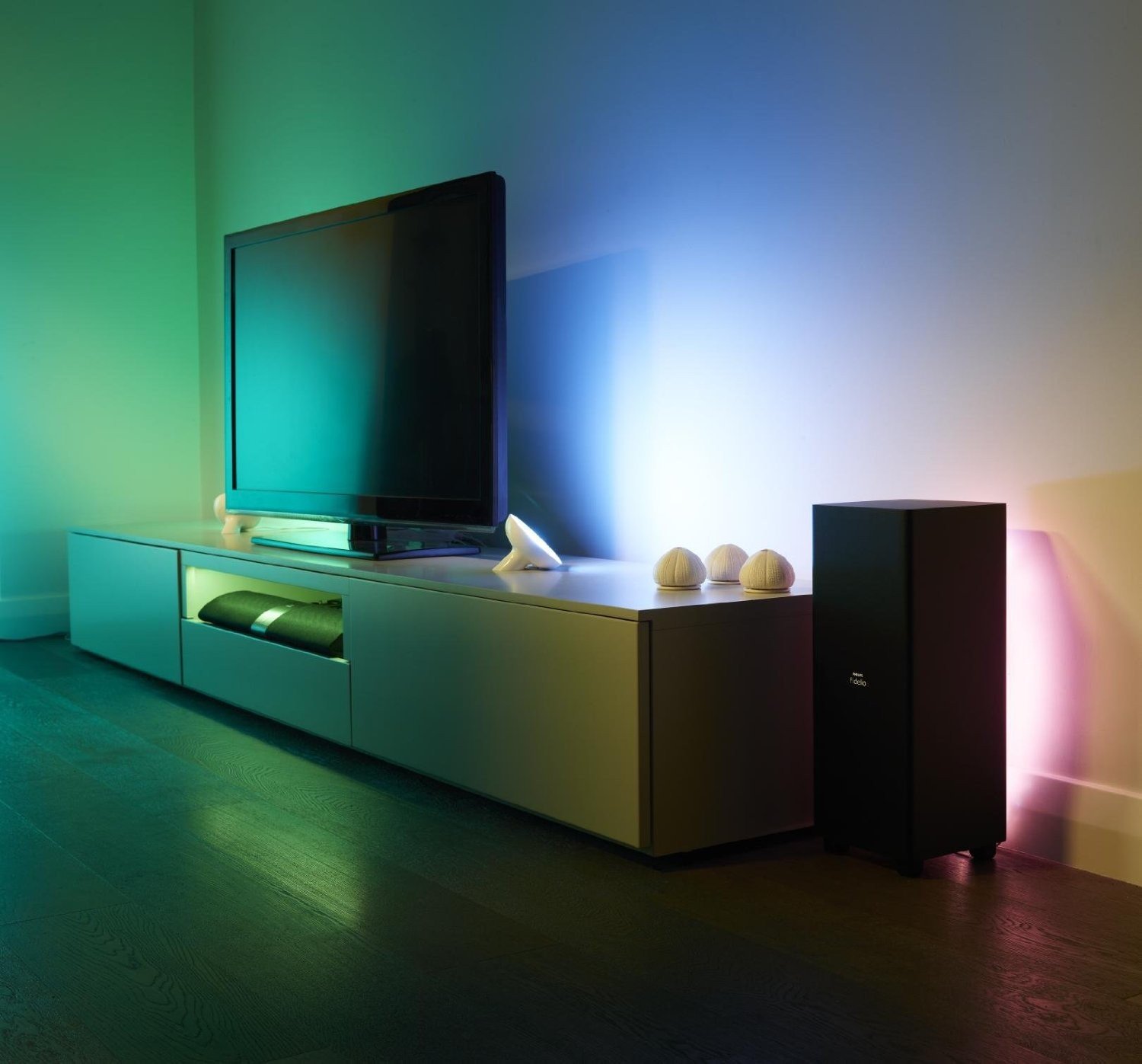
LIFX is one of the biggest brands around when it comes to smart home lighting, offering a wide range of bulbs, strips, and panels to brighten up and color your room. Its selection isn't perfect, though — the bulbs are pricey, and there aren't many accessories to control them. If you're shopping for smart bulbs and don't want LIFX, there are plenty of other options from brands like Philips Hue and Flux.

Popular pick

Philips Hue White and Color Ambience

Philips Hue is the most well-known competitor to LIFX, and offers a similarly wide range of smart lights. The most popular bulb is the White and Color Ambience, but you can also buy light strips, lamps, and accessories like remote dimmer switches and motion sensors.

$48 at Amazon

Cheaper alternative

Xiaomi Yeelight

Xiaomi doesn't just make phones; it actually has a massive collection of smart home devices, including its Yeelight smart lights. Like Philips Hue, Yeelights come in a wide variety of form factors, so you can buy what works best for your home — whether that's a bulb, lamp, night light, or even a candela.

$30 at Amazon

Wi-Fi or Bluetooth

Flux Smart LED Bulb

Flux doesn't have the broad selection that LIFX and Philips Hue offer, but its bulbs are more affordable and can still be controlled through Wi-Fi — though some of its bulbs actually utilize Bluetooth instead, which cuts costs even further but means that you won't be able to change your lights away from home.

$36 at Amazon

No hub necessary

TP-Link LB130

TP-Link is an established smart home brand, and its LB130 bulb is a good option that, like LIFX's bulbs, doesn't require a hub to control. Get this if the LIFX bulbs are too expensive or your local store doesn't have them in stock.

$35 at Amazon

Back to basics

GE C-Life

If you don't care about colors and all you want is a light you can turn on and off from your phone, GE's C-Life bulb is as simple as it gets. By default, it can only be controlled over Bluetooth, but you can buy a separate hub if you'd rather use Alexa or Google Assistant. Best of all, it's very inexpensive.

$8 at Amazon

Light panels

Nanoleaf Aurora Rhythm

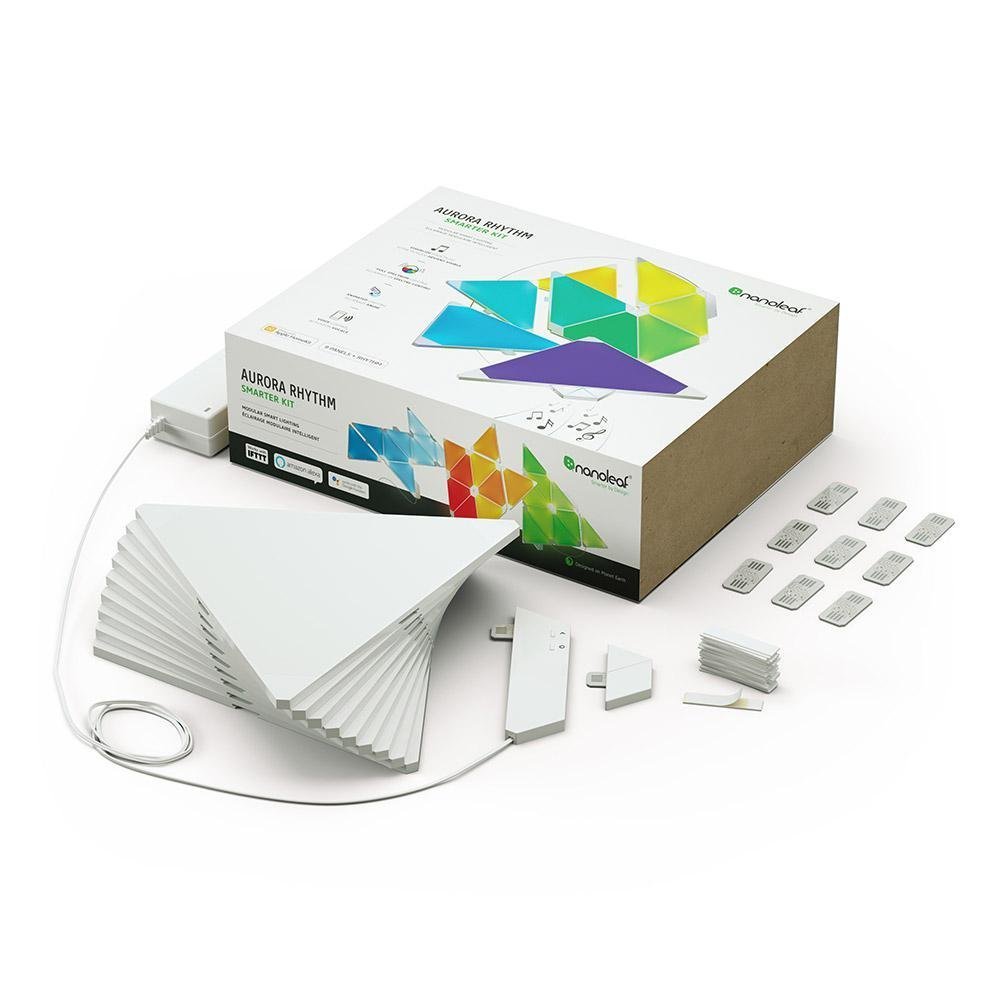
Nanoleaf doesn't sell light bulbs, but if you're looking for an alternative to the LIFX Tile, the Aurora Rhythm is a fun and eye-catching product that lets you light up your room and even coordinates colored lights with music. What's more, you can buy a hardware controller to change the colors of the panels.

$226 at Amazon

There are plenty of smart lights to choose from, and the best options will come down to your wants and needs. I've been using LIFX bulbs for years, but I just bought my first Philips Hue bulb because the included wall-mountable remote works perfectly in our guest room that doesn't have a light switch, and a few people on the team swear by their Nanoleaf Aurora panels. Find what works best for you, and don't be afraid to buy into multiple brands! After all, almost all of them can be controlled by your virtual assistant.


from Android Central - Android Forums, News, Reviews, Help and Android Wallpapers https://ift.tt/2R84Ivj
via IFTTT

3rd-generation Google Chromecast purchased at Best Buy weeks early

For better or worse, the design is staying exactly the same.

It's been a hot minute (read, 3 years) since Google updated the Chromecast, but a recent FCC filing made it seem a new model was coming. If a redditor who managed to buy one early is to be believed, not only do we have a good look at the new model, we also have a date for its public release — and a better idea of when the Google Pixel 3 event will be held.

Redditor /u/GroveStreetHomie says that they found this on the shelf at their local Best Buy, and when they went to buy it, the cashier couldn't ring it up, as the SKU had been held the system for an October 9th release date. Luckily for us all, since the new and old Chromecasts have the same price, the store staff apparently let them buy it under the current generation Chromecast's SKU. Upon getting it home, they gave us all a quick comparison of the 2nd and 3rd generation:

  • "It seems a little thicker."
  • "The top is no longer glossy and the Chrome logo has been replaced with the G Google logo."
  • "Still micro-USB (sad right)."
  • "They did remove the magnetic HDMI connector on the tip and base of the Chromecast which is a bummer."

Sticking to microUSB is indeed unfortunate, as is the loss of the magnets for easy cable management and securing of the Chromecast to the back of your TV. We can't see how the new model performs — if it indeed has Bluetooth support as the FCC filing suggested — as the current Google Home app is incompatible with the new model, but we won't have much longer to wait.

After all, October 9th is only 10 days away. The question is, will that date only bring a new Chromecast, or the new Google Pixel 3, too?

According to the FCC listing from August, this new Chromecast will be the first to support Bluetooth. The current model does have a Bluetooth chip, but it's only used during the initial setup process and can't be enabled by users afterward.

The FCC documents show that Google thought about just sending a software update to the exisitng Chromecast to enable this functionality, but "because this new model requires a new equipment code (DSS) not covered by the original certification for FCC ID A4RNC2-6A5, the new version of device requires a new FCC ID."

Along with Bluetooth functionality, the new Chromecast will also offer improved Wi-Fi reception with 5GHz networks:

This device has been changed to include a 0.5 mm trim on the 5GHz PCB antenna trace that increases the 5GHz maximum antenna gain from 2.1 dBi to 4 dBi.

Google might announce the new Chromecast at its upcoming Pixel 3 event that's expected to take place in early October, but seeing as how the design for the updated model will be identical to the current one, it's entirely possible it'll simply be sold in place of the existing Chromecast with no fanfare surrounding it. The October 9th release date mentioned by the Best Buy staff it still fast approaching, and we still do not know exactly when the Made by Google event will be.

Here's why the NVIDIA Shield TV is still being updated after three years

Updated September 29, 2018: We've updated this post to include the first appearance of the presumed 3rd generation Chromecast, found and acquired by a lucky redditor on Friday night, 11 days before its alleged October 9th release date.


from Android Central - Android Forums, News, Reviews, Help and Android Wallpapers https://ift.tt/2LbKcpH
via IFTTT

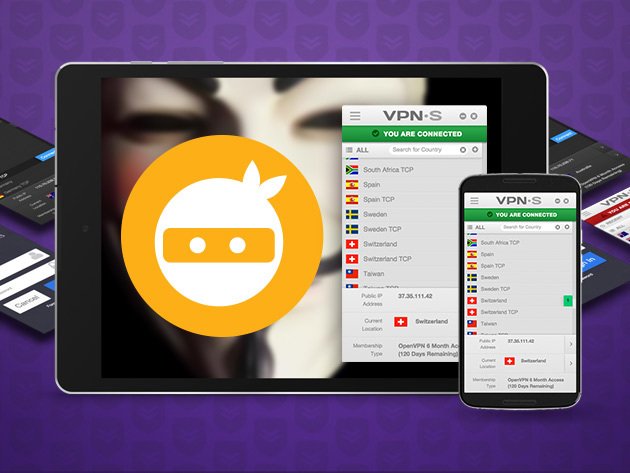
VPNSecure is currently 94% off

Banking information. Mortgage payment history. Your important documents. Nearly all of your life is online these days, and, while convenient, that can be scary. There are many people out there looking to act maliciously, and we need to be sure that is in the back of our brains at all times. While you can't avoid using the internet (in most cases), you can ensure that it is a secure connection when you do use it.

VPNs have become more and more popular as the time passes because people want to make sure that the information they are transmitting is getting to the right places. VPNSecure is a great option, and right now you can score a sweet deal on a lifetime subscription to the service. With it you'll be able to connect up to five devices at the same time, use unlimited bandwidth and more.

Some of the key features include:

  • Allows you to bypass geolocation blocks on your favorite streaming networks
  • Encrypts your traffic so hackers can't access your data
  • Hides your location & IP address
  • Supports torrents
  • Allows you to connect five devices simultaneously
  • Grants you the ability to choose Data Cipher
  • Uses Stealth VPN to render your VPN traffic unrecognizable
  • Delivers unlimited bandwidth
  • Does not keep any logs of your activity
  • Includes servers in 46+ countries & counting
  • Protects against DNS leak fixes, kill switches & more

You are getting a whole lot for your money here. VPNSecure normally costs $450 for the lifetime subscription, but right now you can pick one up for only $25.

Browsing the web can get you in loads of trouble if you aren't careful, so be sure to grab this at its 94% discount to secure your browsing sessions.

See at Android Central Digital Offers


from Android Central - Android Forums, News, Reviews, Help and Android Wallpapers https://ift.tt/2kiFazz
via IFTTT

These are the best cases for travel with your PS4

Here are some cases to help keep your PS4 safe as you travel.

There are times where you absolutely have to hit the road with your PlayStation 4. When I need to move my PS4 from point A to point B, I use the USA Gear Case because of its flexibility and storage space.

Best bang for your buck

CTA Digital Case

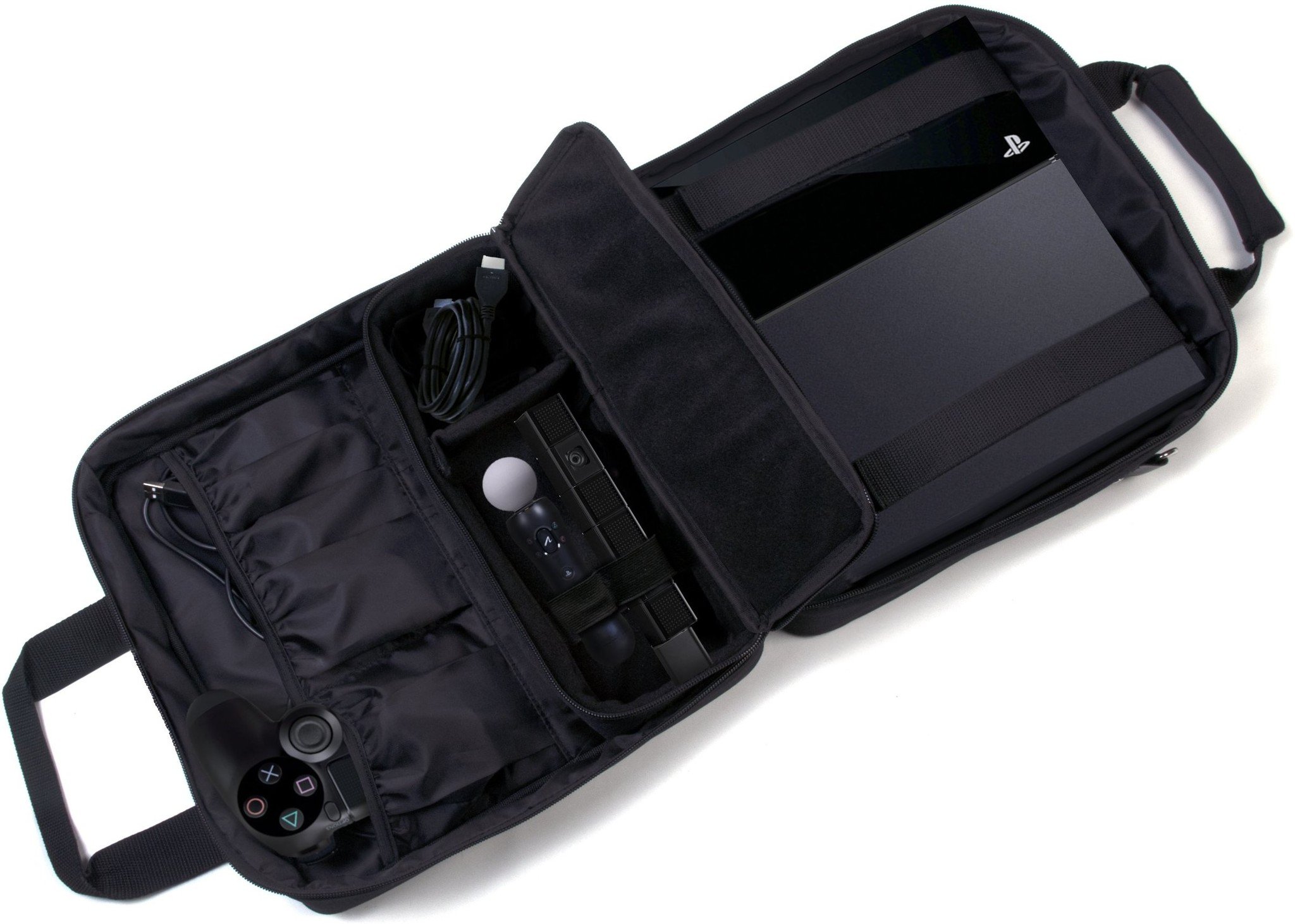
If you're looking for a case for your PS4 but you don't want to break the bank, then you can't do much better than this carrying case by CTA Digital. The modest exterior design of this bag is good for those who don't want to advertise that they are hauling around a PS4. There is plenty of room inside to house your console, a couple of controllers, all the needed wires, and a handful of game discs.

$30 at Amazon

More protection

Hard travel case

If you want a solution that offers a bit more protection and you're willing to throw down a few extra bucks then you're probably going to want a hard case. This Case by co2CREA offers a comparable amount of storage as the previous entry with a much more durable exterior. Another bonus is the storage compartments which can be adjusted to suit your specific needs.

$40 at Amazon

Flexibility and storage

USA Gear case

No matter what iteration of PS4 you own, this baby can handle it. The nylon exterior is wrapped around a reinforced shell to protect your precious cargo. The inside offers plenty of storage for whatever extras you may want to bring with you and it can also be customized with adjustable dividers. Finally, when you have it all loaded up, toss it over your shoulder with the padded strap and you are good to go!

$45 at Amazon

For when you just need your controller

RDS Industries controller case

There may be some times where you're headed out to do some gaming and you don't need to bring your whole console. If the only thing you need is your controller and you want to make your dual shock doesn't take any shock then you might want to pick up this controller case from RDS industries. It's a well-made little case which does exactly what it sets out to do.

$19 at Amazon

For some folks, traveling with a PlayStation on hand is a must. If you are one of those people, hopefully these cases — like the excellent USA Gear Case, will help you to get where you're going without your console taking any taking any damage. I wish you the safest of travels and the happiest of gaming sessions!


from Android Central - Android Forums, News, Reviews, Help and Android Wallpapers https://ift.tt/2FlzKwL
via IFTTT

10 years of Android: How the best mobile OS was made

You've come a long way, baby.

Step into the Wayback Machine and travel to October 2008, if you will.

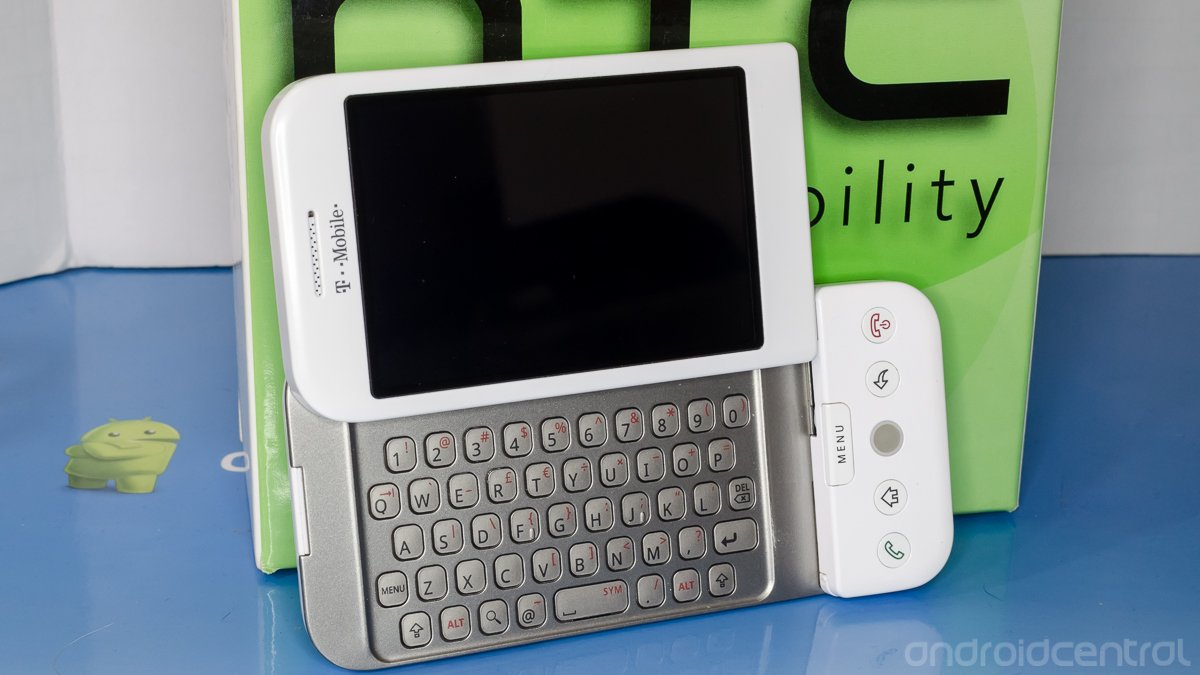
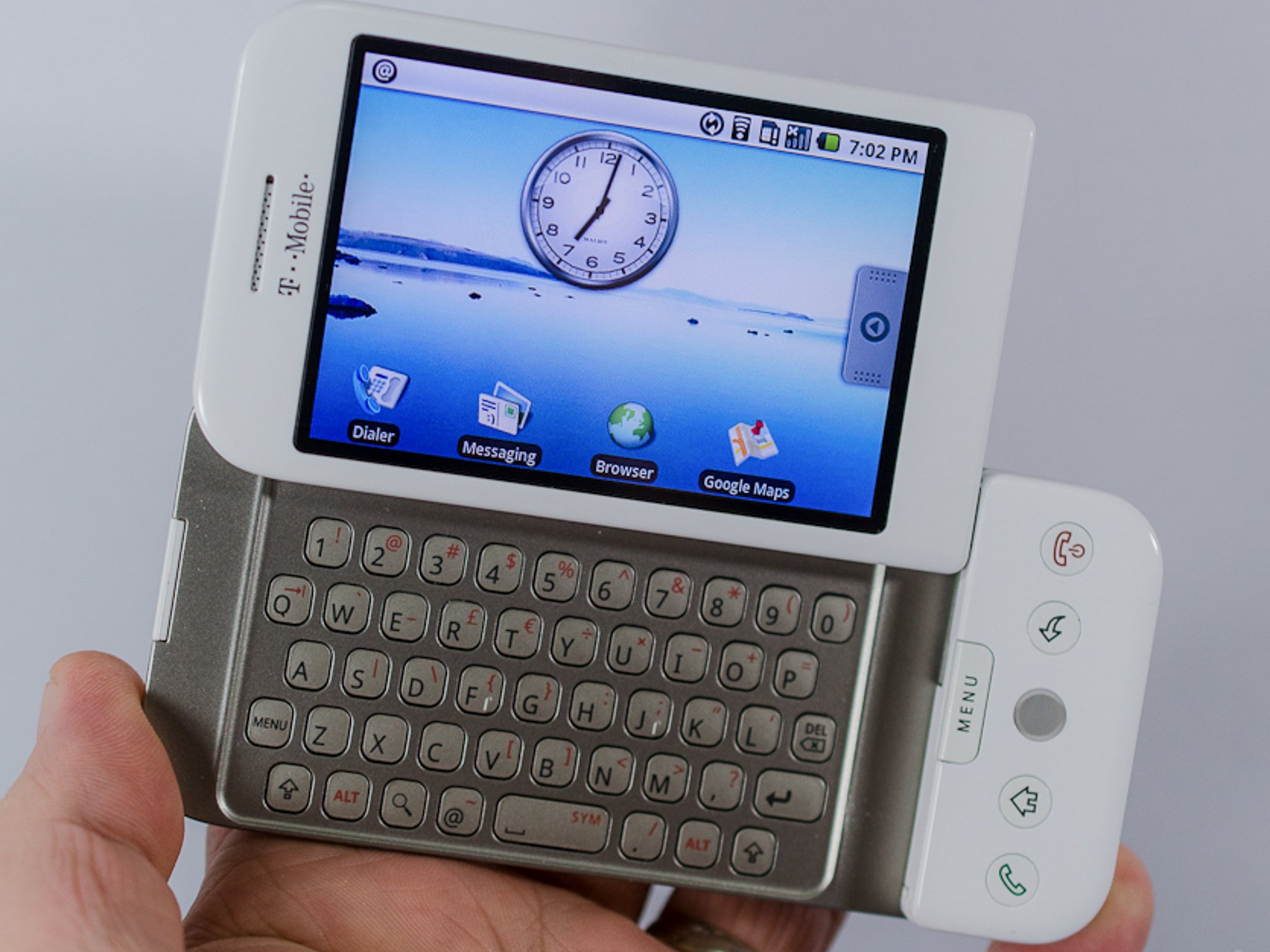
I was with a small crowd of other folks at a Washington, D.C. T-Mobile store waiting in line to buy the T-Mobile G1. It was a phone that had a very limited release — in the U.S. only high-volume T-Mobile retail stores in areas with 3G deployments were selling them — and it was also a phone that wasn't even going to work once I got it home (blame that pesky T-Mobile 3G-only thing again). But I had to have it because it was a phone that was running this crazy new Linux-based OS from Andy Rubin and Google called Android.

A turbo-charged Sidekick?

By today's standards, the T-Mobile G1 was a dumpster fire. It featured a 3.2-inch plasticky-feeling capacitive display, a big chin with a weird clicky trackball that didn't act at all like the trackball every BlackBerry user was used to (and there were a lot of BlackBerry users back in 2008), a sliding horizontal qwerty keyboard, and almost no internal storage or memory. And that's not even mentioning the weird headphone adapter you needed and that fact that multi-touch drivers had to be removed from the phone due to "legal" reasons. No matter what phone you have in your hands right now, it's a lot better than the G1.

Nobody knew it would become so popular; we all just knew it was pretty cool.

But back then, this was a masterpiece of engineering on both the hardware and software side. The minds that brought us the Sidekick now worked for Google and we had an awesome new toy.

Look back at that phone you have in your hands again, and you can thank the T-Mobile G1 for it being the way it is. Android changed the way we all think about "mobile" as much or more than the iPhone did, and the G1 started it all.

This was during the days before we knew what an app store was (though other companies did distribute mobile apps via the internet) and a 3 M/second download speed on T-Mobile's amazing new 3G network rocked our socks off. It's kind of crazy what was enough to make people actually like the G1 on the software side. You had Gmail, a rudimentary web browser, a big round clock widget and little else. You could see your contacts and calendar, and the predecessor to Hangouts — GChat — was there and crashed the entire network in some places because it didn't know how to act nice and not send a gazillion pings every minute.

Android on the G1 would outrage any reviewer or customer by today's standards. But we kept hearing how Android was going to keep getting better and small quick updates made us all believe it.

DROIDS and Galaxies

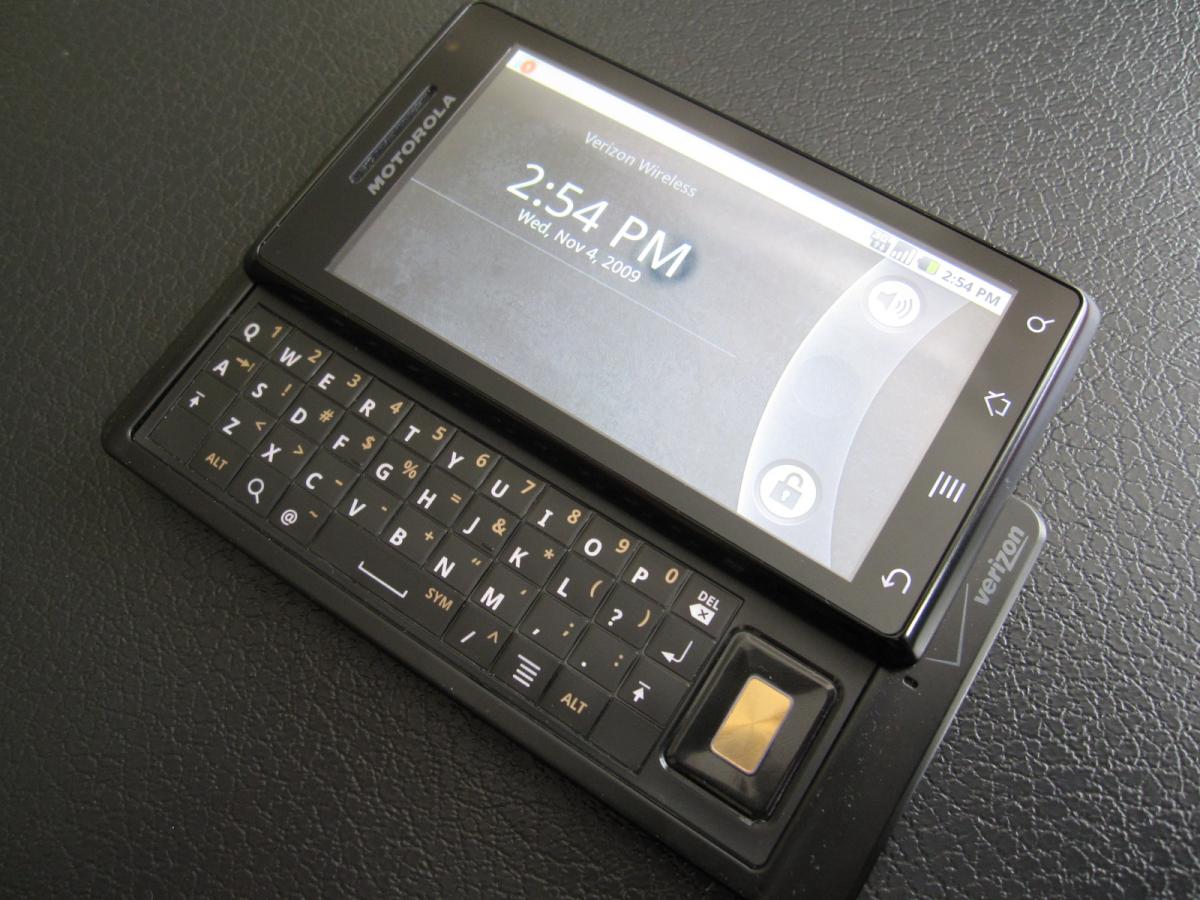
Only a few people actually bought a G1. Partially because the interest was in the iPhone, and partially because it was tied to T-Mobile, which, a decade ago, was not a carrier people loved. Android saw light adoption, even though companies like Samsung and Motorola were also making Android phones worldwide. Then, Verizon and its marketing team got involved and gave us the DROID.

You remember the commercials and billboards. You remember the Super Bowl ad. You remember the DROOOOIIIIIDDDDD sound. We saw things change as Android was suddenly in the hands of millions and millions of people.

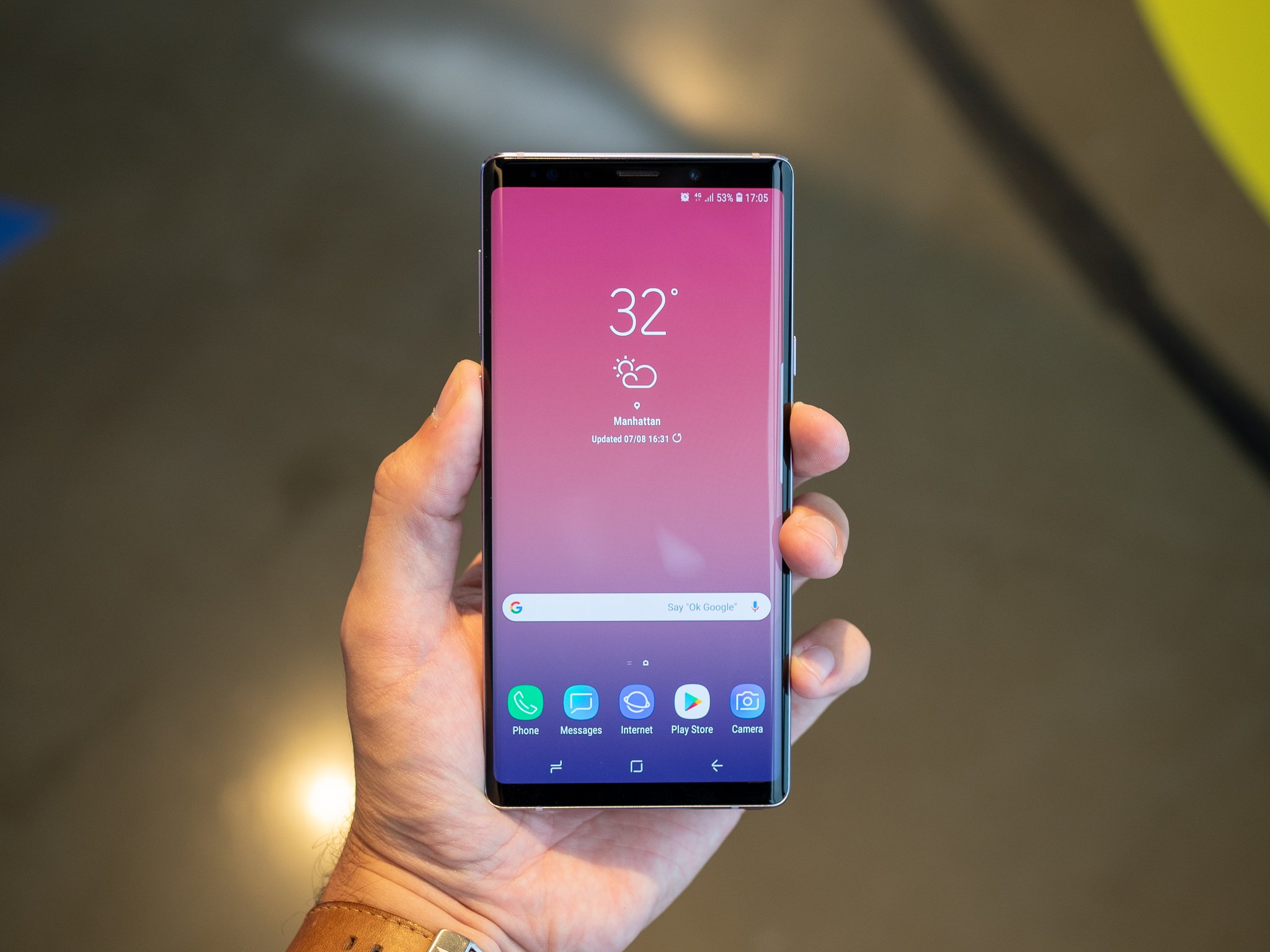
A year later, Samsung noticed, and took things to a new level with the launch of the Galaxy S. While Motorola and Verizon had about 70 million people to target, Samsung had the entire world watching and wanting the coolest new phone anyone had ever seen.

The original Galaxy S had the improvements Google made to Android — multitouch came back, turn-by-turn navigation through Google Maps was awesome, all your Google information was working together with mail, contacts, and calendar being a seamless thing — but Samsung went crazy with the software and Android looked more like an oddball version of a desktop OS than anything we saw previously. TouchWiz was born, and whether you loved it because it was over the top or hated it because it was over the top it changed everything. Everything.

10 years later

Plenty of companies have helped make what is Android Pie. Sony, LG, OnePlus, Huawei, and more are all very important partners that have contributed to the code that makes Android work. But you can draw a simple timeline using the T-Mobile G1, the Motorola Droid, and the Samsung Galaxy S to see how we got here.

Many companies make Android what it is, even if Google's name is on the box.

There were some other important milestones — HTC changed things again with the Nexus One/EVO 4G and their 1GHz mobile processors, the first Galaxy Note wasn't a success by any measure but it's why we see 5-inch plus screens and oodles of storage and memory, and LG showed how awesome two cameras could be with the G5.

Even the budget space has seen some amazing evolution and every $300 or less phone would suck had it not been for the Moto G. Each one of these partners and their keystone devices are what allowed Google to transform Android into what we see in 2018.

Android is now a smart platform for connected devices, but seeing how it's evolved on our phones is amazing. Ben Bajarin wrote in 2013 that Android was now software for commodity electronics and things like Amazon's $29 Fire TV Stick show he was right. But on the mobile side — phones and other devices we carry every day — Android is now a powerful computer and can do just about everything one would need in a pocket PC. It's become the base that successful companies use to build incredible software on incredible devices.

Samsung showed us all what Android really is — just the backbone for a custom operating system — with the first Galaxy S phone. But the core parts of Android Pie provide an astounding array of features and functionality that nobody even dreamed of in 2008. Notifications that do more than let you know someone is trying to send you a message or an interface to camera hardware that the manufacturer decides is best but still works seamlessly with the rest of the software are incredible feats of engineering. Android adapts to any screen — televisions and watches running Android are commonplace — because it was designed to adapt, but on a smartphone, it shines.

The next 10 years will be just as interesting and none of us know what to expect from Google, Samsung, BlackBerry or any of the rest of the companies that make the Android ecosystem. But we all know it's going to be really, really cool.


from Android Central - Android Forums, News, Reviews, Help and Android Wallpapers https://ift.tt/2NT7FSH
via IFTTT

Does the Samsung Wireless Charger Duo work with the iPhone?

Best answer: Yes, most modern iPhones support the same Qi charging standard as Samsung's Wireless Charger Duo. You'll be able to charge relatively quickly as well, reaching up to 7.5 watts.

Amazon: Samsung Wireless Charger Duo ($114)

Does my iPhone even have wireless charging?

If you've bought a new iPhone in the last couple of years, there's a good chance it has wireless charging. In fact, since Apple switched from metal to glass designs on the back of its phones, every new model has supported it — that means the iPhone 8, 8 Plus, X, XS, XS Max, and XR.

If you have an older iPhone, you can still technically get wireless charging working ... sort of. Some battery cases, like the Mophie Juice Pack Wireless for the iPhone 7, support Qi wireless charging for their internal battery, which in turn charges your iPhone through its Lightning port — though exactly how fast the case can charge will vary from product to product.

How well does the Wireless Charger Duo work?

Newer iPhones support Qi wireless charging at up to 7.5 watts. That's the same speed that Samsung's Wireless Charger Duo maxes out at, and while it's obviously made to support phones like the Galaxy Note 9, it works just as well with iPhones.

As the name implies, the Wireless Charger Duo can charge up to two devices at once. On the left half of the charger is a vertical stand to prop up your phone, while the other half is flat; you can still charge a second phone on the flat portion, or use it to charge a smartwatch like the new Apple Watch Series 4.

To achieve the full 7.5W fast wireless charging that your iPhone is capable of, you'll need to be updated to at least iOS 11.2 — though you should probably be on iOS 12 by now anyway. According to Tom's Guide's testing, the iPhone X can reach 20% from a dead battery after half an hour through fast wireless charging. That's even faster than charging with the included wired charger (which reaches 17% after 30 minutes), though it's still far outpaced by a fast wired connection (50% after 30 minutes).

Make it a double

There are plenty of wireless chargers that work well with the newer line of iPhones, but Samsung's Wireless Charger Duo makes it easy to charge two phones or a phone and a watch at the same time.

Our pick

Samsung Wireless Charger Duo

$114 at Amazon

The Wireless Charger Duo works just as well with iPhones.

Samsung's latest wireless charger not only powers two devices at once, but it charges them at up to 7.5 watts, allowing for fast wireless charging on newer devices like the iPhone XS.


from Android Central - Android Forums, News, Reviews, Help and Android Wallpapers https://ift.tt/2xKviCQ
via IFTTT